Oct 7, 2026
Translation Glasses vs. Translation Earbuds: 2026 B2B Guide
Translation glasses vs. translation earbuds: a B2B comparison of form factors, 2026 market data, and checks before private-labeling translation wearables
Translation Glasses vs. Translation Earbuds: 2026 B2B Guide
Translation glasses and translation earbuds do the same job: they listen to speech, run it through AI models, and hand the wearer the meaning in their own language a second or two later. If you buy for a retail chain, run an Amazon brand, or assemble corporate gifting programs, the 2026 question is not whether translation wearables sell. It is which form factor fits your channel, and whether one supplier can cover both.
This guide compares real-time translation glasses against AI translation earbuds from a sourcing standpoint, walks through the retail math, and ends with a checklist to run before you place a purchase order.
What Translation Glasses and Translation Earbuds Actually Are
Both form factors share one architecture. Microphones pick up speech. An app running large AI models converts it. The wearer hears or reads the result within a second or two. The difference is where the hardware sits and what else it can do.
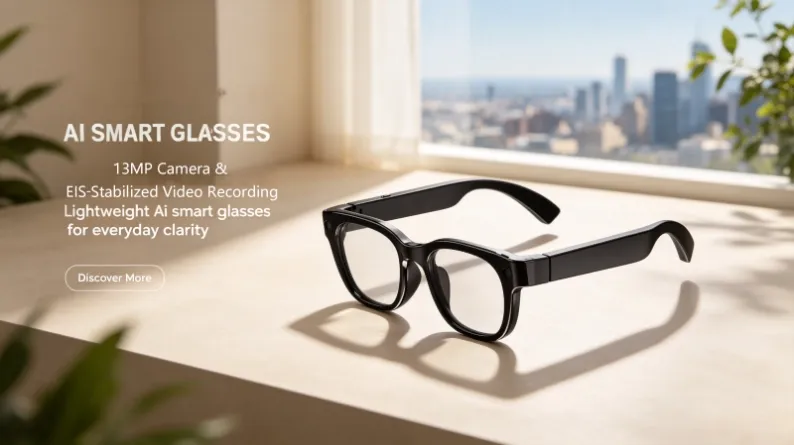
Translation glasses put open-ear speakers in the temple arms and microphones near the mouth. Because nothing seals the ear canal, the wearer hears the room and the translation at the same time. Smart glasses with translation add a camera or display, which extends the feature from speech to text: a menu, a street sign, a departure board. Translator glasses are the only form factor that handles what a traveler reads without a phone.
Language translation earbuds run the same microphone-plus-AI stack in a smaller package. Most ship with three modes. One-way listening translates a guide, a lecturer, or an announcement. Two-way conversation mode captures both speakers and delivers each translation in turn. Text and photo translation runs through the companion app: point the phone camera at a document and read it in your own language.
Why 2026 Is the Year to Pay Attention
Two years ago, live translation was a demo trick. Then Ray-Ban Meta launched it in December 2024 with English plus Spanish, French and Italian. Per ARCompare's September 2026 comparison, Meta's language support grew from 4 to about 20 languages in roughly 18 months, and the glasses now translate text you look at, not just speech. Even Realities expanded its language support from 24-plus to 37 languages (ARCompare, September 2026).
That consumer-brand momentum matters to you, because it lowers the cost of explaining the category at shelf. Shoppers who have seen a Meta ad already understand the promise.
Volume estimates point the same way. Research firms size the instant language translator earbuds market at roughly 4.78 billion by 2033, a CAGR near 13.7 percent (FutureDataStats). Estimates vary by definition, but the direction is the same. The broader AI earbuds market is projected to reach $17.34 billion by 2030 at a 23.6 percent CAGR, per a May 2026 ResearchAndMarkets report covered by Yahoo Finance.
Treat those figures as directional. The practical signal is simpler: consumer brands have trained the market, and the component stack is now standard enough for factory-direct lines to match the core experience at a fraction of the price.
Translation Glasses: Where They Win
Translation glasses win wherever the wearer needs both hands free and both ears open. Speakers sit in the temple arms, so the wearer follows a conversation while hearing the translated voice alongside the original. Nobody passes a phone back and forth. Nobody shares an earbud. Two people just talk.
Text is the second advantage. A traveler looks at a menu and hears the translation, and the camera covers what the ear cannot: street signs, gate changes. Ray-Ban Meta translating text you look at (ARCompare, September 2026) moved this from novelty to expectation, so buyers now ask for it by default.
The third advantage is wear time. Travelers already wear sunglasses for hours, so a translation feature rides along instead of demanding pocket space. For travel retail and duty-free shelves, that matters more than any benchmark score. That also decides your listing photo: a wearer studying a foreign menu with a phone on the table displaying the split-language transcript sells the feature. A studio shot of the frames alone does not.
Translation Earbuds: Where They Win
Translation earbuds win indoors, in meetings, and anywhere a camera on someone's face feels intrusive. In a negotiation, open-ear buds read as ordinary headphones. No counterparty has to wonder whether they are being recorded, a real objection against camera glasses in corporate settings.
Earbuds also cover phone calls, which glasses handle poorly. A student can wear AI translation earbuds through a lecture, then take calls on the same pair afterward. For education and corporate gifting, that dual use justifies the purchase on workdays, not just trips abroad.
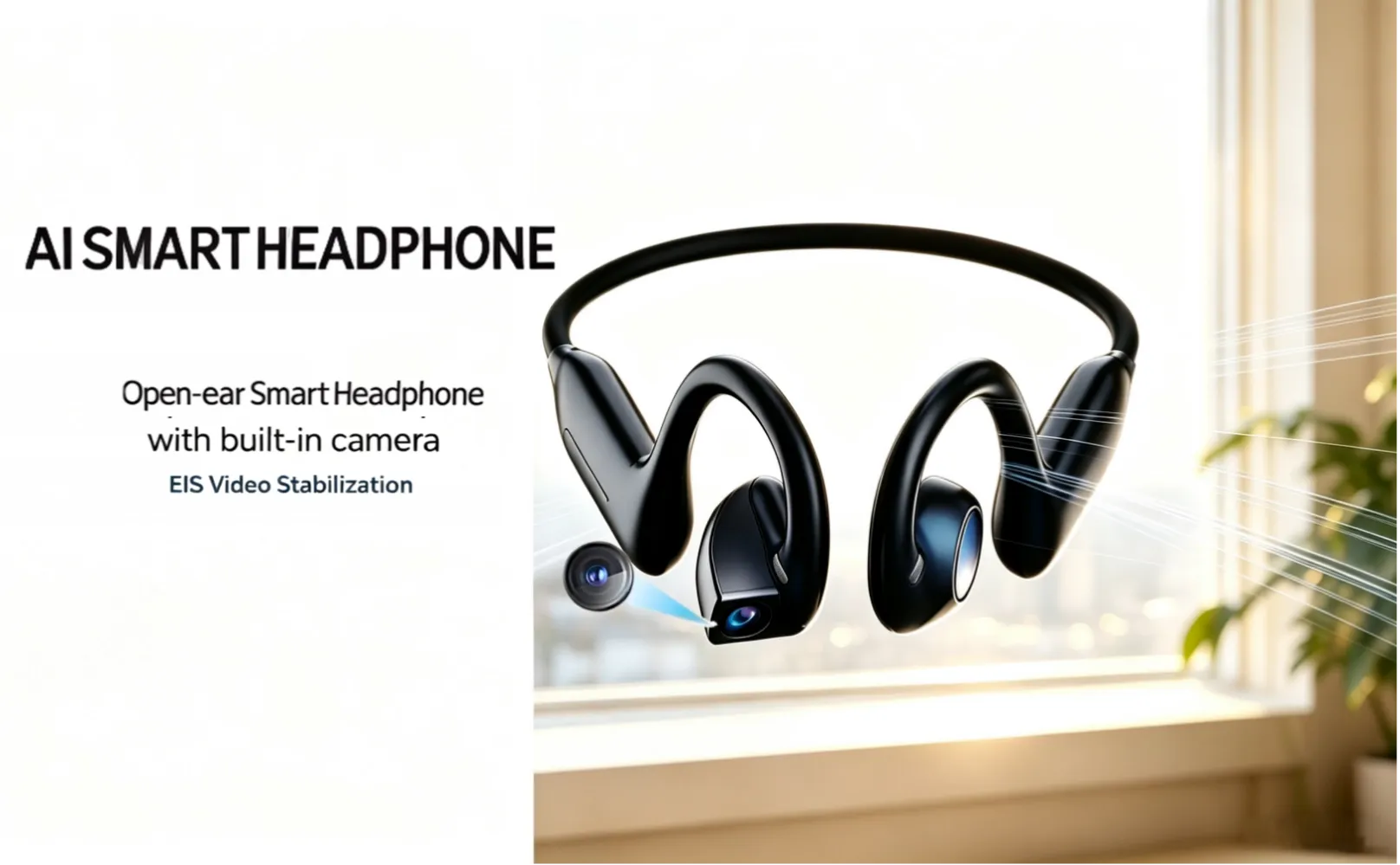
Price closes the argument for many channels. Without a frame, lenses, or a camera module, earbuds cost less to build and less to replace when one lands in a puddle. That is why translator earbuds wholesale listings multiply on Amazon and in electronics chains first: the product stocks easily, demos cheaply, and explains itself in one sentence. Our own E900 open-ear pair runs simultaneous interpretation, conversational translation, and meeting minutes, wakes to "Hi, Luma", and connects to Alibaba Tongyi Qianwen and OpenAI models through the companion app.
The Retail Math: Which Form Factor Fits Your Channel
Channel fit decides more than spec sheets.
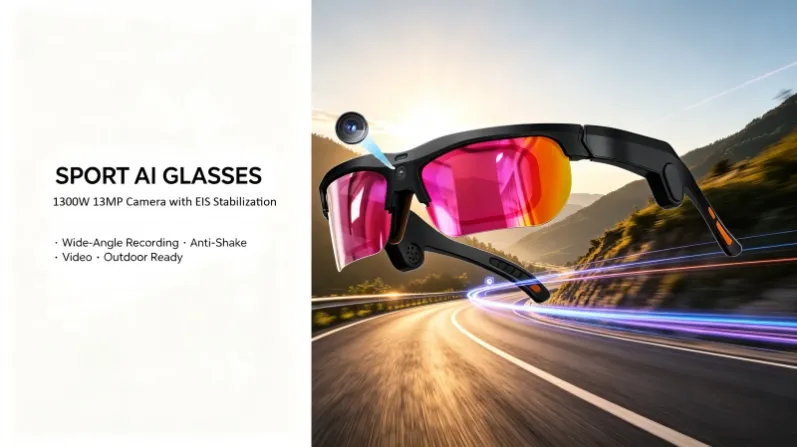
Travel retail sells glasses. The customer is already thinking about a trip, sunglasses are a natural category in airport and duty-free stores, and the demo is instant: hand over the frames, have a staff member speak a second language, watch the reaction. Returns trace mostly to fit and style, so the frame lineup (wayfarer, aviator, sport) is a genuine purchasing decision, not a detail.
Corporate and education buyers lean toward earbuds. Procurement can expense them as ordinary headsets, IT rarely raises an objection, and the same units serve as call headphones long after the event that prompted the order. Where glasses carry a higher ticket, earbuds move in volume.
Demo economics differ too. Glasses demo themselves; earbuds need a phone running the app with language packs already downloaded. A demo station without downloaded offline packs is the most common way a good product stalls in a store. And in a noisy exhibition hall, demo failure has a specific look: the mic array locks onto the PA announcement instead of your colleague, and the phone screen starts translating the building. Test every unit you plan to list under the worst noise you sell in, not in a quiet meeting room.
For many distributors the honest answer is both: earbuds for volume and entry price, glasses for ticket size and the travel counter.
Sourcing Checklist for Real-Time Translation Glasses and Earbuds
Run this list before you commit to a supplier. Generic sourcing questions like MOQ, mold status, and tooling ownership apply here as they do elsewhere; our camera earbuds category guide covers that ground, so this list sticks to what translation specifically changes.
- Language counts vs. reality. A headline number (our glasses line advertises up to 144) can hide uneven quality. Ask which language pairs are tuned for two-way conversation, which are one-way only, and how the count was measured. Headline counts also shift with app updates, so pin the number in the purchase agreement and attach a test script.
- Online vs. offline language packs. Ask exactly which languages work without a data connection, whether offline packs are free to download, and how large they are. Offline support decides purchases where data roaming costs bite, and it is the first thing a demo station needs configured.
- Latency, measured by you. Count the seconds between speech and translation on every demo unit. Past a couple of seconds of lag, conversations turn into turn-taking. Insist on testing in noise, not in a quiet conference room.
- AI model dependency. Most products run on large models from providers such as OpenAI or Alibaba Tongyi through a companion app. Ask who owns the API account, what happens if the provider changes pricing or access, whether users need a subscription, what the product does offline, and who maintains the app and its updates. The app is half the product.
- Microphone array quality in noise. The mic array, not the AI model, decides most real-world performance. Ask the microphone count and whether beamforming is implemented; a three-mic array is the practical baseline on open-ear buds. Then test at arm's length in a loud space.
- Certification paperwork. Do not let translation capability distract from compliance. Ask which certificates the supplier can provide per SKU (CE, FCC, and RoHS are the usual asks), and confirm each certificate matches the exact model number you are ordering.